Wednesday, October 14, 2009

Questions to guide your research:


Helping Hand!


Name of my partner and I:


ME and my PARTNER!
1. What is your chosen Human body system?

2. Describe your chosen body system

3. What is your disease
within the body system you have chosen? Describe this.

4. How does the disease affect the
system? Describe.

5. How does the disease affect the organs of your chosen system and the cells and
other systems involved?


Partner 1:
1. What are the main organ(s) in your chosen system and their cells?
2. Where are the organ(s) located in the body?
3. What are the individual functions of the organ(s)?
4. What is the function of your chosen system?
5. How do various organs in your system work together to carry out the desired function(s)
of the system, to enable survival?
6. How well do current pharmaceutical and/or medical interventions work?


Partner 2:
1. What are the mechanisms (processes) of your chosen system?
2. How do they allow it to work with other systems to perform functions for survival?
3. What is your disease?
4. How does the disease affect(s) the primary organs of the system?
5. How does the disease affect/s your systems ability to complete necessary functions for
survival?
6. What might be the predictions as to how the treatments may change in the future?

To get you started

To get you started on your assignments here are some interesting diseases and body systems in which are affected. NOTE: You do not have to choose from these, they are only some examples of what you can use.

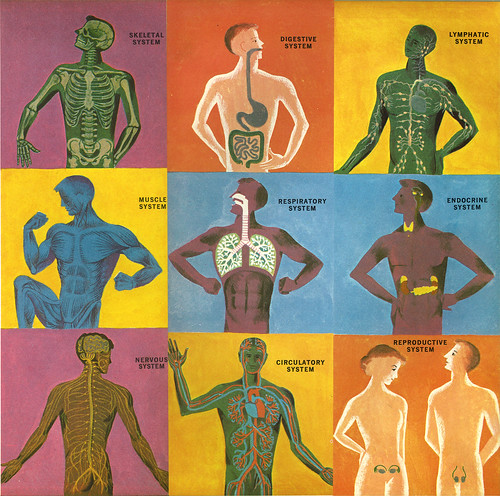
Human Body Systems and diseases associated within these:

Digestive System:

  • Irritable Bowel Syndrome
  • Crohn's Disease

Respiratory System:
Diseases of:

Circulatory System:


The diseases of the circulatory system are those that affect the heart, blood vessels and blood. They include such conditions as:

  • Coronary heart disease (heart attack and angina),
  • High blood pressure,
  • Blood clotting (excess stickiness of the blood),
  • Peripheral vascular disease (narrowing of the blood vessels, especially in the legs),
  • Strokes (obstruction of or bleeding from the blood vessels of the brain),
  • High blood fat levels (which are associated with all of the above problems), and
  • Problems in the blood

Muscular and skeletal Systems:

  • Joint Injuries
  • Sprains
  • Dislocation/Subluxations
  • Cartilage damage
  • Joint swelling
  • Spinal Curves and Deformities
  • Cervical and Lumbar Disc Lesions
  • Degrees of damage: annular tear
  • Disc prolapse (see above diagram)
  • Osteoporosis – meaning “porous bone”
  • Spina Bifida (Occulta)

Nervous System:

  • Bell’s Palsy
  • Cerebal Palsy
  • Motor Neurone Disease
  • Multiple Sclerosis
  • And Many More

Lymphatic System:

  • Infections
  • Infectious mononuclesosis
  • Cancer e.g. Hodgkin’s
  • Metastasis of cancerous cells via the lymphatic system
  • Elephantiasis

Endocrine System:

  • Adrenal Gland Diseases
  • Endocrine Gland Neoplasms
  • Pituitary Diseases
  • Diabetes Mellitus
  • Gonadal Disorders
  • Thyroid Diseases
  • Parathyroid Diseases
  • Dwarfism

Male Reproductive System:

  • Epididymitis
  • Male reproductive system neoplasm
  • Penis disorder
  • Prostate disorder
  • Testis disorder

Female Reproductive System:

  • Cervix disorder
  • Endometriosis
  • Female reproductive system neoplasm
  • Menstrual cycle disorder
  • Ovary disorder
  • Pelvic inflammatory disease
  • Placenta disorder
  • Pregnancy disorder
  • Pseudopregnancy
  • Puerperal disorder
  • Uterus disorder
  • Vagina disorder

Urinary System:

  • Agenesis
  • Hypoplasia
  • Persistant faetal lobulation
  • Displacement or ectopic kidney

Resources

Hi year 9 here are a few resources in which you can use for your assignment. The purpose of this blog is to share resources, information and questions or concerns that you may have. Some things in which you can add are pictures, some interesting information you found on either your assignment or either something interesting we talked about in class. This blog is part of your assessment. So get going and have fun blogging.

To get off to a head start above the rest have a look at a few of these movies and other relevant information:

The Circulatory/Cardio-vascular System:
http://library.thinkquest.org/5777/cir1.htm - Circulatory System: How the Blood Gets Around the Body
http://kidshealth.org/kid/htbw/_bfs_CSmoviesource.html
http://www.americanheart.org/presenter.jhtml?identifier=4567
http://www.americanheart.org/presenter.jhtml?identifier=1200002
http://www.baybio.org/pdf/IMPACT07_Cardio.pdf
http://www.youtube.com/results?search_query=the+circulatory+system&search_type=&aq=0&oq=the+circul

The Digestive System:
http://kidshealth.org/kid/htbw/_bfs_DSmoviesource.html
http://www.innerbody.com/image/digeov.html
http://kidshealth.org/kid/htbw/digestive_system.html
http://www.enchantedlearning.com/subjects/anatomy/digestive/
http://www.youtube.com/results?search_query=The+Digestive+System&search_type=&aq=f

The Respiratory System:
http://kidshealth.org/kid/htbw/_bfs_RSmoviesource.html
http://www.fi.edu/learn/heart/systems/respiration.html
http://library.thinkquest.org/5777/resp1.htm
http://video.google.com.au/videosearch?hl=en&rlz=1T4PCTA_enAU265AU265&q=The+Respiratory+System&um=1&ie=UTF8&ei=AALUSsCVKsKIkQXT2rHtDQ&sa=X&oi=video_result_group&ct=title&resnum=10&ved=0CCQQqwQwCQ#
http://www.virtualmedicalcentre.com/anatomy.asp?sid=18
http://www.youtube.com/results?search_query=The+Respiratory+System%3A&search_type=&aq=f

The Endocrine System:
http://kidshealth.org/kid/htbw/_bfs_ESmoviesource.html
http://www.innerbody.com/image/endoov.html
http://kidshealth.org/parent/general/body_basics/endocrine.html#
http://www.vivo.colostate.edu/hbooks/pathphys/endocrine/
http://www.youtube.com/results?search_query=The+Endocrine+System%3A&search_type=&aq=f

Other interesting resources for your assignment:
http://kidshealth.org/teen/diseases_conditions/
http://kidshealth.org/teen/infections/
http://kidshealth.org/kid/htbw/htbw_main_page.html
http://www.innerbody.com/htm/body.html

Welcome Year 9


This terms focus in on the Human body and its nature. Throughout the term, we will be looking at, The Circulatory System /Cardio-vascular System , The Respiratory System, The Digestive System and The Excretory System.

The term consists of one MAJOR practical which is a heart dissection; we will be carrying this out later in the term.

Assessment this term is assignment based which you will pair up with someone in the class, who you would like to work with and present an oral presentation. The topic of the assignment is “Disease inside us”. We will talk more about this in the next few weeks in class.